
Samsung Galaxy A37 Review: Balanced Performance with Premium Features

The Samsung Galaxy A37, announced on March 25, 2026, and released on April 9, 2026, is a mid-range smartphone that blends modern design, solid performance, and long-term software support. It is aimed at users who want a reliable daily driver with 5G connectivity and a vibrant display.
Design and Build Quality

The Galaxy A37 features a sleek and slim body measuring 7.4mm thick and weighing 196g. It comes with Gorilla Glass Victus+ on both the front and back, paired with a plastic frame. The phone is IP68-rated, making it resistant to dust and water (up to 1.5m for 30 minutes). It supports flexible SIM configurations including Nano-SIM and eSIM options.
Display Experience

It sports a 6.7-inch Super AMOLED display with a 120Hz refresh rate. The screen offers excellent brightness levels—1200 nits (HBM) and up to 1900 nits peak—ensuring good visibility outdoors. With a resolution of 1080 x 2340 pixels, users can expect sharp visuals and vibrant colors.
Performance and Software
Powered by the Exynos 1480 (4nm) chipset, the Galaxy A37 delivers smooth performance for everyday tasks and moderate gaming. It runs on Android 16 with One UI 8.5 and promises up to 6 major Android updates, making it a future-proof choice in its segment.
Camera Capabilities
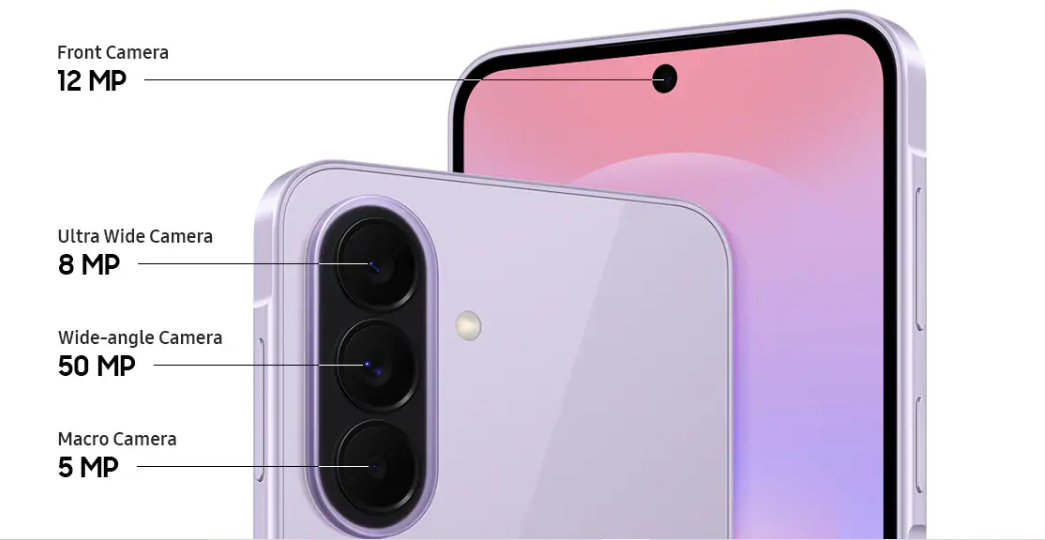
The triple camera setup includes:
- 50MP main camera with OIS
- 8MP ultrawide lens
- 5MP macro lens
It supports 4K video recording at 30fps and delivers decent image quality for its class. The 12MP front camera also supports 4K video and 10-bit HDR, making it suitable for selfies and video calls.
Final Verdict
The Samsung Galaxy A37 is a well-rounded mid-range smartphone offering a premium display, reliable performance, and excellent software longevity. While it misses out on expandable storage and a headphone jack, its overall feature set makes it a strong contender in its price segment.
Samsung Galaxy A37 Specifications At Glance
| Network | |
|---|---|
| Technology | GSM / HSPA / LTE / 5G |
| Launch | |
| Announced | 2026, March 25 |
| Status | Available. Released 2026, April 9 |
| Body | |
| Dimensions | 162.9 x 78.2 x 7.4 mm (6.41 x 3.08 x 0.29 in) |
| Weight | 196 g (6.91 oz) |
| Build | Glass front (Gorilla Glass Victus+), plastic frame, glass back (Gorilla Glass Victus+) |
| SIM |
Nano-SIM + eSIM Nano-SIM + Nano-SIM + eSIM + eSIM (max 2 at a time) IP68 dust tight and water resistant (up to 1.5m for 30 min) |
| Display | |
| Type | Super AMOLED, 120Hz, 1200 nits (HBM), 1900 nits (peak) |
| Size | 6.7 inches, 110.2 cm² (~86.5% screen-to-body ratio) |
| Resolution | 1080 x 2340 pixels, 19.5:9 ratio (~385 ppi density) |
| Protection | Corning Gorilla Glass Victus+, Mohs level 5 |
| Platform | |
| OS | Android 16, up to 6 major Android upgrades, One UI 8.5 |
| Chipset | Exynos 1480 (4 nm) |
| CPU | Octa-core (4x2.75 GHz Cortex-A78 & 4x2.0 GHz Cortex-A55) |
| GPU | Xclipse 530 |
| Memory | |
| Card slot | No |
| Internal |
128GB 6GB RAM 128GB 8GB RAM 256GB 8GB RAM 256GB 12GB RAM UFS 3.1 |
| Main Camera | |
| Triple |
50 MP, f/1.8 (wide), PDAF, OIS 8 MP, f/2.2, 123° (ultrawide) 5 MP (macro) |
| Features | LED flash, panorama, HDR |
| Video | 4K@30fps, 1080p@30/60fps, gyro-EIS |
| Selfie Camera | |
| Single | 12 MP, f/2.2 (wide) |
| Video | 4K@30fps, 1080p@30fps, 10-bit HDR |
| Sound | |
| Loudspeaker | Yes, with stereo speakers |
| 3.5mm jack | No |
| Comms | |
| WLAN | Wi-Fi 802.11 a/b/g/n/ac/6, dual-band, Wi-Fi Direct |
| Bluetooth | 5.4, A2DP, LE |
| Positioning | GPS, GALILEO, GLONASS, BDS, QZSS |
| NFC | Yes (market/region dependent) |
| Radio | No |
| USB | USB Type-C 2.0, OTG |
| Features | |
| Sensors | Fingerprint (under display, optical), accelerometer, gyro, compass Virtual Proximity Sensing |
| Battery | |
| Type | 5000 mAh |
| Charging | 45W wired |
| Misc | |
| Colors | Graygreen, Charcoal, White, Light Violet |
- You may also like: